Lighting Inspection
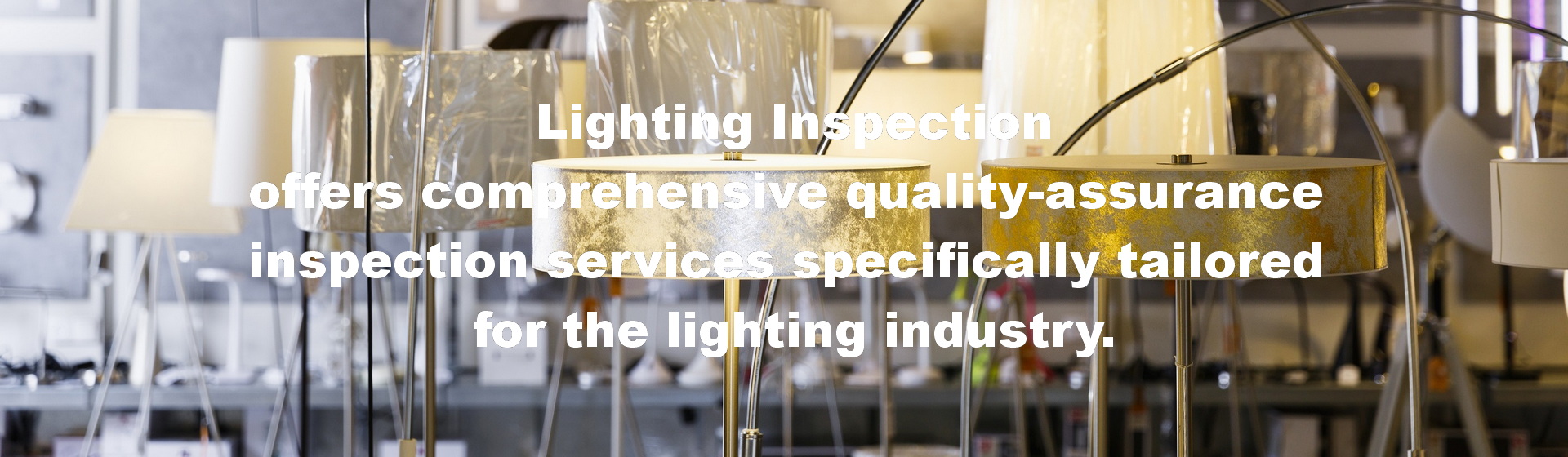
At SIT, we are dedicated to delivering exceptional quality-assurance services, safeguarding the quality, reliability, and safety of your lighting products. Lighting inspections typically involve a combination of visual, mechanical, electrical, photometric and environmental testing. Below are some of the most common types of tests(EN60589/UL1598/UL8750 ect.):
What is Key to perform LED light Inspection?
As Led Light, the key parameter as the following and need to measure the features and quality:
1. Power: measure the energy consumption of LED lights, unit is “watt”, e.g. The power consumption need to meet the specification.
2. Luminous Flux: measure the brightness of LED lights, unit is “Lm”, high luminous flux means good brightness.
3. Color Rendering Index: Abbr is CRI, is a quantitative measure of the ability of LED light to reveal the colors of various objects faithfully in comparison with an ideal or natural light source.
In house control conducted by the factory will be included:
1. Incoming material inspection
The inhouse QC of factory i.e. IQC inspection department for incoming goods, to conduct the inspection for critical parts, such as PCBA, power supply, frame& diffuser plate.
2. Production Control
> Terminal Wiring Station: After each terminal wiring completed, pulling lines to ensure that the connector is fully into the hole.
> PCBA Cable Welding station: After PCB soldering completed, each piece should be lit to test for assembly.
> Frame Assembly Station: Between the assembly process, the inhouse QC need to check whether the framework has the phenomenon such as scratch and cracks after proceed to the next station.
Diffuser plate, light guide plate assembly station
Flipping to check the diffuser plate and LGP if have undesirable defects.
> Sealing Station:To check finished product
> Quality Testing:To conduct test according to internal QC procedure.
> Packaging Inspection:To check packing reliability.
What Will be Checked During Inspection by Veriquality Inspection Service?
1. Appearance
> marking: The correct position, symbol, and size of the mandatory mark are correct, and the product should have a clear and firmly marking.
> Manufacturer’s name and registered trademark, rated voltage, rated power, standard frequency, product name, model specification and production date are correct.
> The packaging is safe and reliable, and the product box should be accompanied by a product certificate, or bearing the manufacturer’s name or registered trademark, inspection date, etc.
> The shells and body’s are free of damage, scratches, spots, stains and other defects affecting the appearance; the surface is free of scratches, rust, pitting.
> The parts are complete without missing, wrongly installed (such as screws) The installation without the looseness, deformation, no burrs, no flash.
> No dust, oil, etc. on the surface of the reflector.
> No color difference in the finished product.
2. Structure Function
> The product structure size meets the approval sample or design requirements. The glass for ultra-white tempered glass thickness should meet the specification.
> The screw connection is firm and reliable, and the screw head is not damaged.
3. Safety & Function Performance Test
> Hi-Pot Test
> Earth Continuity Check
> Polarity Test
> Power Consumption Test
> Standby Power Test
> Power Cord Strain Relief Test
> Power On Test
> Touch Key Button Check
> Fatigue Test to Button/Key
> Battery Charging Test
> Current & Voltage Check of Battery
> Stability Test of Unit
> Pull Test: (Collar and Lamp holder) –Light Chain
> High and Low Temperature Working Test
> Fitness Check for Lamp and Lamp Holder
> Torque Test for Light Components
> Function test
> Endurance Tes
> Smell check
> Rub Test to Logo/Printing by Alcohol
>Adhesion Test to Logo / Printing /Coating by 3M Tape
> Carton Drop Test
> Item Drop test
> QR Code & Barcode Scanning Test
4. Parameter Test
> Color Temperature of Bulb Check
> Luminous Efficiency Check for Energy Safe Bulb
> Lumens Test
What is Important of Lighting Inspection?
Lighting inspections are important for ensuring safety and compliance, which can prevent hazards like electric shock or fire. They also guarantee energy efficiency by identifying outdated or inefficient fixtures, which lowers energy bills and carbon footprints. Additionally, inspections verify performance standards and product quality, which can lead to greater customer satisfaction and maintain a brand’s reputation, especially for manufactured goods.
For efficiency and performance
> Energy savings: Inspecting for outdated or inefficient fixtures helps reduce overall energy consumption and utility costs.
> Optimal illumination: Inspections confirm that lighting levels meet the required standards for a space, ensuring adequate visibility for tasks and preventing safety hazards from poor uniformity.
> Product quality: For manufactured products, inspections check for functional and performance issues, such as ensuring a product meets its expected lifespan and optical characteristics.
For safety and compliance
> Maintain visibility: Regular inspections can prevent dark spots and a general loss of illumination, ensuring a space remains functional.
> Improve well-being: Proper lighting can have positive biological effects, such as stabilizing circadian rhythms, improving mood, and contributing to better sleep.
> Ensure emergency lighting: For commercial buildings, regular testing of emergency lighting is critical to ensure occupants can safely exit during a power outage.