Coating Inspection
Coating inspection is a systematic process of evaluating and documenting the application of protective coatings to ensure they meet specified standards and will perform as intended. It’s not just about checking if the paint looks good – it’s a critical quality control measure that can make the difference between a structure lasting for decades or failing prematurely.
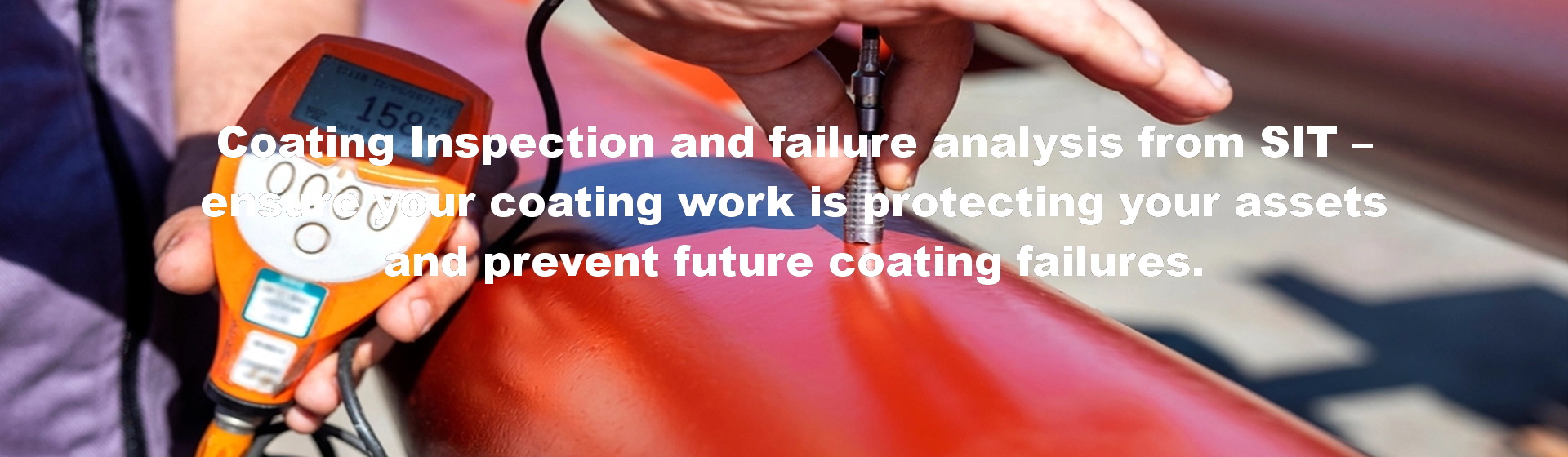
Coating inspection and failure analysis from SIT-ensures your coating work is protecting your assets and prevent future coating failure.
The importance of coating inspection spans various sectors:
Industrial: Protecting equipment from corrosion and chemical damage
Marine: Safeguarding ships and offshore structures from harsh saltwater environments
Construction: Ensuring buildings and bridges withstand weathering and environmental stresses.
The Role of a Coating Engineers: More Than Meets the Eye
Coating Engineers are the guardians of quality in the world of protective coatings. Their responsibilities include:
Verifying surface preparation meets standards
Monitoring environmental conditions during application
Ensuring proper mixing and application of coatings
Measuring coating thickness and detecting flaws
Documenting the entire process for quality assurance.
Verifying surface preparation meets standards
Monitoring environmental conditions during application
Ensuring proper mixing and application of coatings
Measuring coating thickness and detecting flaws
Documenting the entire process for quality assurance.
Corrosion: The Enemy of Coatings
Understanding corrosion is crucial for effective coating inspection. Corrosion can take many forms:
Uniform corrosion: Even degradation across a surface
Galvanic corrosion: Occurs between dissimilar metals
Crevice corrosion: Localized in gaps or crevices
Pitting corrosion: Deep, localized holes in the material
The impact of corrosion on structures and equipment can be devastating, leading to structural failure, equipment breakdown, and significant economic losses.
Surface Preparation: The Foundation of Successful Coating
Proper surface preparation is the cornerstone of effective coating. Coating inspection procedures must include thorough evaluation of surface preparation, which involves:
Adherence to surface preparation standards (SP1 to SP15)
Identification and removal of common surface contaminants like rust, oil, and mill scale
Use of photographic inspection standards for visual comparison.
Essential Tools for Coating Inspection
> Digital Psychrometer: Mastering the Environment
A digital psychrometer is crucial for measuring atmospheric conditions such as relative humidity, temperature, and dew point. These factors significantly impact coating application and curing.
> Surface and Digital Thermometers: The Temperature Detectives
Accurate surface temperature measurement is vital for proper coating adherence. Inspectors use various thermometers to ensure optimal conditions for coating application.
> Surface Profile Measurement Tools: The Texture Analysts
Surface profile plays a crucial role in coating adhesion. Tools like the micrometer dial with Testex replica tape and surface profile gauges help inspectors ensure the right profile for maximum coating performance.
> Coating Thickness Gauges: Measuring the Invisible
Wet film thickness (WFT) and dry film thickness (DFT) gauges are essential for ensuring proper coating application. Understanding the relationship between WFT and DFT is crucial for predicting final coating thickness.
> Holiday Detectors: Finding the Flaws
Low-voltage and high-voltage holiday detectors are used to find tiny holes or thin spots in the coating that could lead to premature failure.
> Telescopic Inspection Mirror: Reaching the Unreachable
For inspecting hard-to-reach areas, a telescopic inspection mirror is invaluable, ensuring no area is left unchecked.
> Documentation Tools: Capturing the Evidence
High-quality cameras and documentation software are essential for recording and reporting inspection findings.
Conclusion
The Lasting Impact of Coating Inspection
As we’ve explored in this comprehensive guide, coating inspection is a critical process that ensures the longevity and performance of countless structures and equipment across various industries. From the fundamental concepts of corrosion and surface preparation to the cutting-edge technologies shaping the future of the field, coating inspection methods play a vital role in protecting our infrastructure and assets.
By understanding the importance of proper coating inspection, utilizing the right tools and techniques, and staying abreast of industry advancements, we can continue to push the boundaries of what’s possible in protective coatings. Whether you’re a seasoned inspector, a project manager, or simply curious about the science behind long-lasting structures, the world of coating inspection offers a fascinating glimpse into the intersection of chemistry, engineering, and quality control.